
Uncategorized
What Is the Drug Percocet?
Aug
What Is the Drug Percocet? Ingredients, Uses, Side Effects, and Addiction Risks
If you have been prescribed Percocet or are caring for someone who takes it, you may have questions about what the medication contains, how it works, and what risks to know about. Understanding the medicine can help you recognize potential side effects, understand dependence, and know when to seek professional medical advice.
What Is Percocet?
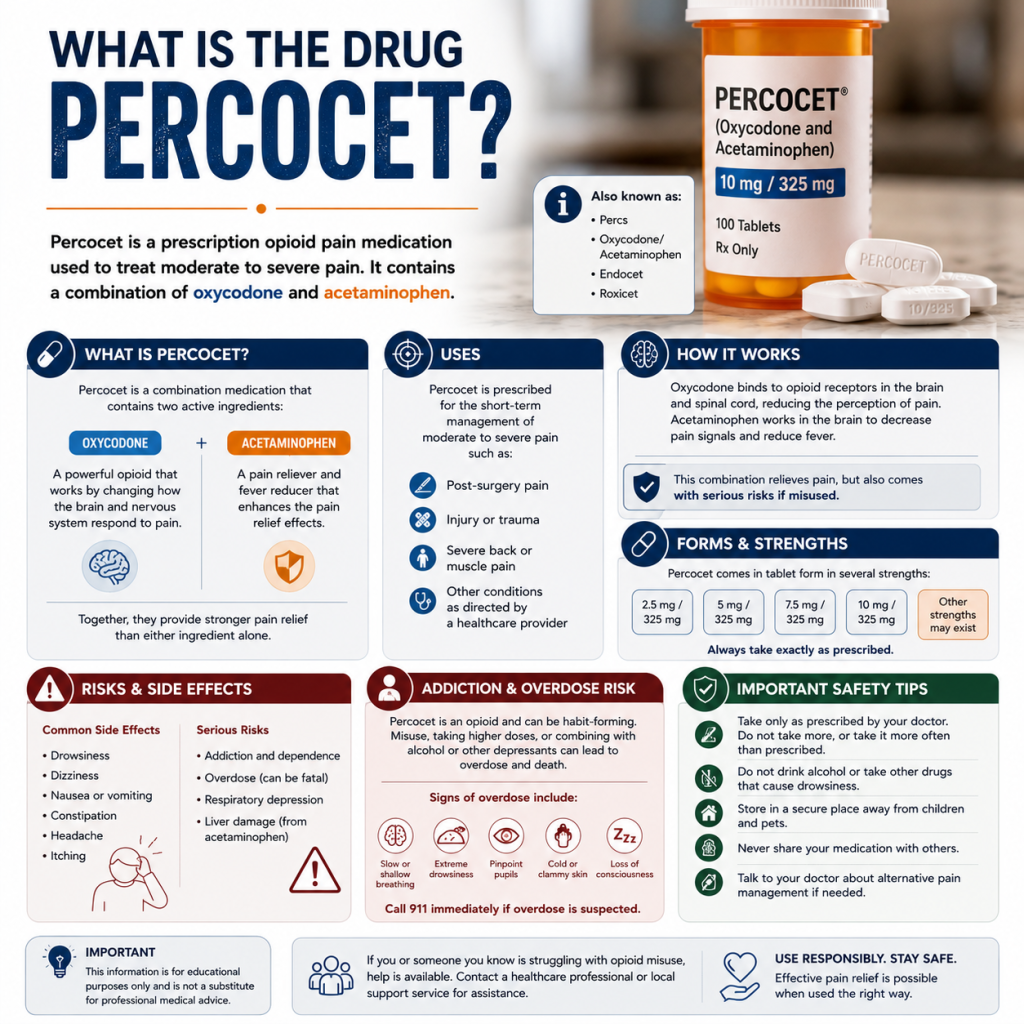
Percocet is a prescription pain medication that combines oxycodone, an opioid pain reliever, with acetaminophen, a non-opioid pain reliever. It is used for pain severe enough to require an opioid when alternative treatments are inadequate, but it carries important risks including respiratory depression, misuse, dependence, and addiction.
Percocet belongs to a group of medicines called opioid analgesics. Oxycodone changes how the brain and nervous system respond to pain, while acetaminophen provides additional pain-relieving effects through a different mechanism.
Because Percocet contains an opioid, it is a prescription medicine that requires careful use. The FDA-approved oxycodone/acetaminophen combination carries warnings concerning addiction, abuse, misuse, respiratory depression, and other potentially serious effects.
For readers researching substances and their effects more broadly, the Organic Shrooms Canada educational resources cover a separate category of psychoactive substances and should not be considered a substitute for medical advice about prescription medications.
What Are the Active Ingredients in Percocet?
The two active ingredients in Percocet are oxycodone and acetaminophen.
Oxycodone: The Opioid Component
Oxycodone is a prescription opioid that works primarily through opioid receptors in the central nervous system. It changes how the brain and nervous system perceive and respond to pain.
The same pharmacological effects that make oxycodone effective for pain can also cause drowsiness and sedation. More seriously, opioids can slow breathing, making respiratory depression one of the most important risks associated with Percocet.
For external information about oxycodone, readers can consult the NIH’s MedlinePlus guide to oxycodone.
Acetaminophen: The Non-Opioid Component
Acetaminophen is a non-opioid pain reliever and fever reducer. In the United States, it is widely recognized by the brand name Tylenol.
In Percocet, acetaminophen complements oxycodone’s pain-relieving action. However, acetaminophen has its own safety considerations: taking too much can cause serious liver damage, potentially leading to liver failure.
Acetaminophen is also found in many other prescription and over-the-counter medicines. Therefore, patients should tell their doctor or pharmacist about all medicines they take so that total acetaminophen exposure can be assessed.
The FDA’s guidance on acetaminophen safety provides additional information about the risks of excessive acetaminophen exposure.
What Is Percocet Prescribed For?
Percocet is prescribed to relieve pain that is severe enough to require an opioid analgesic when alternative treatments are inadequate. The oxycodone component provides opioid pain relief, while acetaminophen contributes additional analgesic effects.
Depending on the medical situation, prescription opioids may be used for certain types of acute pain, including pain following an injury, surgery, or another medical procedure. The decision to use an opioid depends on the person’s condition, medical history, expected duration of pain, and potential risks.
Not every type of pain requires an opioid. Healthcare professionals may consider non-opioid medications and other approaches depending on the cause and severity of the pain.
Common Side Effects and Risks of Percocet
Percocet can cause side effects because of both its opioid and acetaminophen components.
Commonly reported opioid-related effects can include:
- Drowsiness or tiredness
- Dizziness or lightheadedness
- Nausea
- Vomiting
- Constipation
- Sedation
- Reduced alertness
Oxycodone can cause drowsiness and dizziness, while constipation is a common effect of opioid medicines.
Respiratory Depression
One of the most serious risks of Percocet is respiratory depression, in which breathing becomes dangerously slow or inadequate.
According to MedlinePlus, oxycodone can cause serious or life-threatening breathing problems, particularly during the first 24 to 72 hours of treatment and when the dose is increased. Combining opioids with alcohol, certain sedatives, or other central nervous system depressants can further increase the risk.
Emergency warning signs can include:
- Very slow, shallow, or stopped breathing
- Extreme difficulty waking up
- Severe or unusual sleepiness
- Loss of consciousness
- Long pauses between breaths
These symptoms require immediate emergency medical attention.
Acetaminophen and Liver Damage
The acetaminophen component creates another important safety issue.
Taking excessive amounts of acetaminophen can cause serious liver injury. The FDA notes that symptoms of acetaminophen overdose can sometimes be delayed, meaning a person should not wait for symptoms before seeking medical help after a suspected overdose.
This is one reason it is important to check the ingredients of other medicines taken alongside Percocet.
Understanding Dependence and Addiction
Because Percocet contains oxycodone, continued use can result in physical dependence and tolerance. It can also lead to opioid use disorder in some people.
These concepts are related but aren’t identical.
What Is Tolerance?
Tolerance occurs when the body becomes accustomed to a medication and its effects become less pronounced over time.
Tolerance can develop with opioid treatment, although changes in pain and other factors can also influence how effective a medication feels.
What Is Physical Dependence?
Physical dependence means that the body has adapted to repeated exposure to the medication.
If someone who has been taking an opioid regularly suddenly stops taking it, withdrawal symptoms can occur. Depending on the person’s treatment history, a healthcare professional may recommend a gradual reduction rather than abrupt discontinuation.
What Are the Signs of Percocet Addiction?
Potential warning signs of problematic opioid use can include:
- Strong cravings for the medication
- Difficulty controlling use
- Continuing to use the medication despite harmful consequences
- Spending substantial time obtaining or using the drug
- Neglecting important responsibilities because of use
- Using the medication in ways that differ from the prescribed treatment plan
Physical dependence alone does not automatically mean someone has an addiction or opioid use disorder. A person can become physically dependent while taking an opioid exactly as prescribed.
If you are worried about your own use or someone else’s use, a healthcare professional can assess the situation and discuss appropriate treatment options. Medications and behavioral therapies are among the established approaches used to treat opioid use disorder.
Percocet and Other Psychoactive Substances
Percocet is an opioid prescription medication and should not be confused with psychedelic substances such as psilocybin.
If you are researching the effects and risks of different psychoactive substances, keep their pharmacology separate. For example, our psychedelic integration guide discusses a different class of substances and the psychological process of reflecting on psychedelic experiences.
Similarly, readers interested in broader educational information about mushrooms can explore the Organic Shrooms Canada blog.
These internal resources provide relevant context without suggesting that Percocet and psychedelic mushrooms are interchangeable or medically equivalent.
Frequently Asked Questions
How long does Percocet stay in your system?
There is no single detection period that applies to everyone. How long oxycodone and its metabolites remain detectable can depend on factors including the formulation, frequency of use, metabolism, kidney and liver function, and the type of test being used.
If you are concerned about a specific drug test, ask the testing provider or a healthcare professional about the particular test rather than relying on a generalized timeline.
Is Percocet the same as oxycodone?
No. Oxycodone is one of the active ingredients in Percocet. Percocet combines oxycodone with acetaminophen, while some oxycodone medications contain oxycodone without acetaminophen.
Is Percocet addictive?
Percocet can lead to misuse, physical dependence, and addiction because it contains oxycodone, an opioid. The risk varies between individuals and can occur even when opioid medication is prescribed appropriately.
Can you stop taking Percocet suddenly?
If you have been taking Percocet regularly, stopping suddenly may cause opioid withdrawal. Talk with your healthcare professional before making changes to long-term opioid treatment so that your medication can be managed safely.
How long does Percocet stay in your system?
On average, Percocet has an elimination half-life of about 3.5 hours (meaning it takes roughly 3.5 hours for the body to metabolize and eliminate half of the active dose). However, detectable traces can remain longer depending on the testing method used:
- Urine tests: Typically detect traces for up to 3 days.
- Saliva tests: Can show positive results for up to 2 days.
- Blood tests: Generally clear within 24 hours.
- Hair tests: Can detect long-term use for up to 90 days.
Can I drink alcohol while taking Percocet?
No. Combining alcohol with Percocet is extremely dangerous. Both substances are central nervous system depressants. Mixing them multiplies the risk of severe respiratory depression, extreme lethargy, overdose, and fatal consequences.
Important Safety Disclaimer
Percocet is a prescription medication with potentially serious risks. Never take another person’s prescription, take more than prescribed, or combine it with alcohol or other sedating substances unless your healthcare professional specifically advises you to do so.
If someone taking an opioid becomes extremely difficult to wake, loses consciousness, or develops slow, shallow, or stopped breathing, seek emergency medical assistance immediately.
If you are concerned about dependence, withdrawal, side effects, or whether Percocet is appropriate for your pain, speak with a doctor or pharmacist. Online information can provide background knowledge, but it cannot replace an individualized medical assessment.
