magic mushroms facts
How Long Does It Take for Shrooms to Kick In?
Aug
How Long Does It Take for Shrooms to Kick In? A Complete Timeline and Guide for Beginners
Embarking on your first psychedelic journey can bring a natural mix of excitement and anticipation. One of the most common questions first-time explorers ask is: “How long does it take for shrooms to kick in?”
Understanding the general timeline of a psilocybin experience can help reduce uncertainty. However, onset times vary from person to person, so the following timeline should be viewed as a general guide rather than a guarantee.
Below is a comprehensive look at the typical magic mushroom timeline, the factors that can influence onset, and practical considerations for staying comfortable and reducing potential risks. If you’re new to the subject, you can also explore the site’s broader information about magic mushrooms before continuing.
The Typical Onset Window: 20 to 60 Minutes
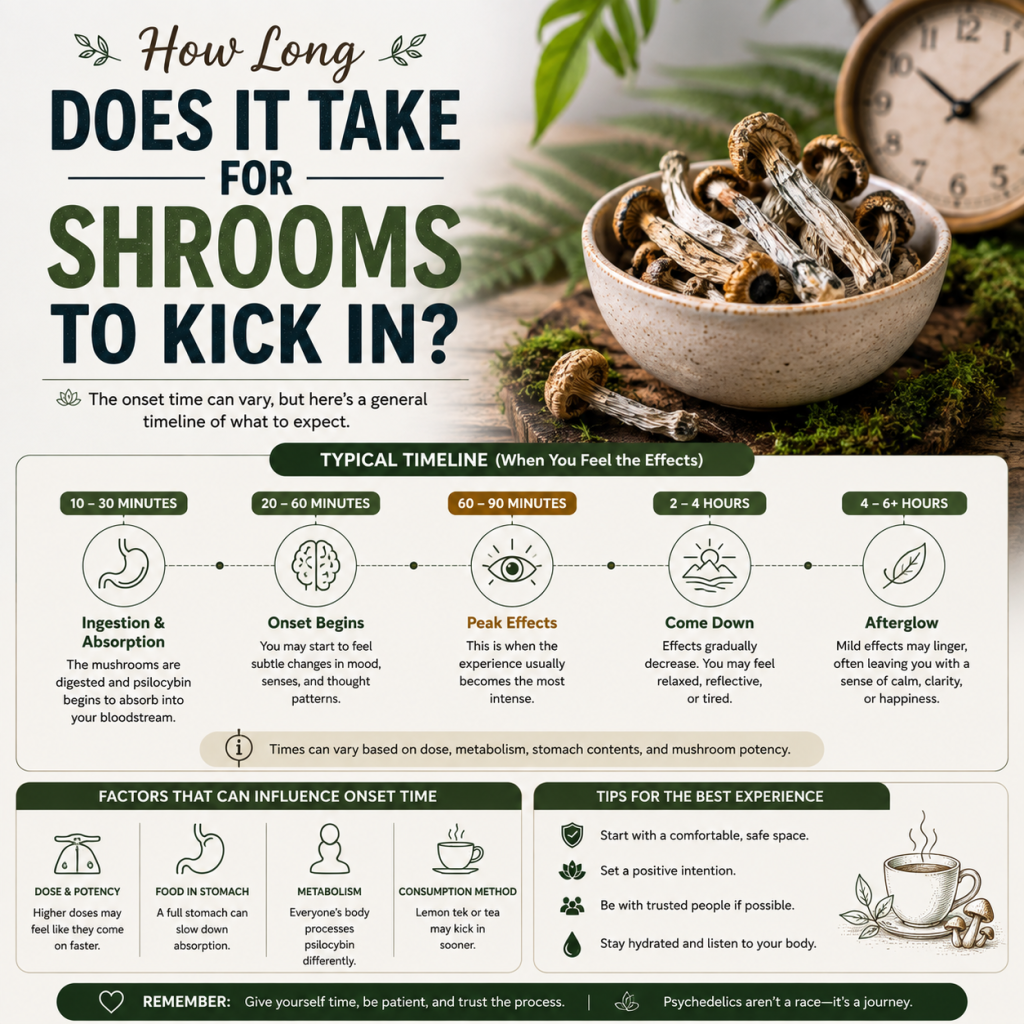
For many people consuming dried mushrooms containing psilocybin, noticeable effects begin within approximately 20 to 60 minutes.
After ingestion, psilocybin is converted by the body into psilocin, the compound primarily responsible for the psychedelic effects. As psilocin becomes active, changes in perception, mood, body sensations, and thought patterns may gradually emerge.
During this initial period, you might notice:
- Subtle body changes: Tingling, warmth, lightness, or mild stomach discomfort may occur.
- Perceptual changes: Colors, lights, sounds, or patterns can begin to seem more pronounced.
- Mental shifts: Thoughts may become more associative, introspective, emotional, or unusual.
- Changes in mood: Some people experience curiosity or euphoria, while others may initially feel nervous or unsettled.
First-Timer Tip: Don’t Rush to Take More
A delayed onset does not necessarily mean that the mushrooms are inactive. Digestion and individual physiology can make the timing unpredictable.
For this reason, avoid taking more simply because you don’t feel effects yet. Waiting for the initial amount to take effect is preferable to assuming that a delayed onset means nothing is happening. Taking additional amounts too soon can unexpectedly increase the intensity once the effects begin.
Factors That Influence How Fast Shrooms Kick In
Not every psychedelic experience follows exactly the same timeline. Several factors can influence when effects become noticeable.
1. Stomach Contents
What and when you last ate may affect the speed of onset.
An empty stomach may be associated with a faster onset for some people, while a substantial meal beforehand can delay the appearance of effects. However, food should not be considered a precise way to control the timing or intensity of the experience.
2. Method of Consumption
The way mushrooms are prepared may also influence how quickly effects are noticed.
- Raw or dried whole mushrooms: These need to be chewed, swallowed, and digested before the active compounds become available.
- Mushroom tea: Preparing mushrooms as a tea may change how quickly effects are perceived, although the exact timing varies.
- Edible products: Edible preparations must still pass through the digestive system, so their onset can vary considerably.
Because individual responses differ, specific claims such as “tea always kicks in within 10 minutes” should be treated cautiously.
3. Individual Metabolism
Everyone processes substances differently. Digestive function, body chemistry, previous psychedelic experience, medications, and other substances can all contribute to differences in onset and intensity.
As a result, one person’s experience shouldn’t be used as an exact prediction for someone else.
The Complete Shroom Trip Timeline
A typical psilocybin experience can last several hours, although the duration and intensity vary considerably between individuals.
A simplified timeline looks like this:
[0m: Ingestion]
      ↓
[~20–60m: Possible onset]
      ↓
[~1–3h: Increasing effects / peak]
      ↓
[~3–5h: Gradual comedown]
      ↓
[Several hours+: Return toward baseline]
Phase 1: The Onset — Approximately 20 to 60 Minutes
During the onset, subtle changes may gradually become more noticeable.
You might experience changes in body sensations, mood, sensory perception, or thought patterns. Mild nausea or stomach discomfort can also occur during this stage.
If anxiety appears, moving to a quiet and familiar environment can help reduce unnecessary stimulation. Calm music, comfortable surroundings, and a trusted sober person may also provide reassurance.
Phase 2: The Ascent and Peak — Approximately 1 to 3 Hours
As the effects intensify, changes in perception and thinking can become more pronounced.
Depending on the individual and circumstances, experiences may include visual changes, altered perceptions of time, intensified emotions, unusual thought patterns, and deep introspection.
This stage can also be challenging for some people. If someone becomes frightened or confused, maintaining a calm environment and offering simple reassurance can be helpful.
For readers interested in understanding what can happen psychologically after a psychedelic experience, see our guide to psychedelic integration.
Phase 3: The Comedown — Approximately 3 to 5 Hours
As the acute effects begin to diminish, perception and thinking generally move gradually toward their usual state.
The comedown isn’t always completely linear. Effects may fluctuate, and some changes in mood, perception, or thought can remain for several hours.
Phase 4: The Afterglow — Several Hours and Beyond
Once the strongest effects have passed, many people gradually return to their normal state.
Some users describe feeling calm, reflective, or emotionally clear afterward, sometimes referring to this period as an “afterglow.” However, this isn’t universal. Others may simply feel tired or ready to return to their usual routine.
Practical Preparation for First-Timers
If someone chooses to use psilocybin despite the potential risks, thoughtful preparation can help reduce some avoidable problems.
Choose a Safe Environment
A familiar, comfortable setting can be preferable to an unfamiliar or unpredictable environment. Avoid activities involving driving, swimming, heights, traffic, or other hazards.
Consider Having a Sober Support Person
A trusted, sober person can provide reassurance and practical assistance if the experience becomes confusing or overwhelming. This can be especially valuable for someone with little or no psychedelic experience.
Avoid Mixing Substances
Combining psilocybin with alcohol, recreational drugs, or medications can make the effects less predictable and may increase risks. If you’re taking prescription medication, speak with a qualified healthcare professional about potential interactions rather than relying on anecdotal advice.
Don’t Rush the Experience
Patience is particularly important during the onset period. If effects haven’t appeared yet, that doesn’t necessarily mean they won’t.
Taking additional amounts too soon can result in unexpectedly intense effects once the initial amount begins taking effect.
Know When to Seek Help
Severe agitation, dangerous behavior, loss of consciousness, seizures, chest pain, difficulty breathing, or other serious physical symptoms require urgent medical attention.
If someone becomes a danger to themselves or others, seek emergency assistance rather than attempting to manage the situation alone.
Related Reading
If you’re looking for more educational information, explore Where To Buy Magic Mushrooms for broader information about the subject, or visit the site’s Blog for additional articles and guides.
Final Thoughts
So, how long does it take for shrooms to kick in? For many people, noticeable effects begin approximately 20 to 60 minutes after ingestion, although there can be significant variation.
The experience may then intensify over the following hours before gradually declining. Food, preparation, individual physiology, medications, and other substances can all influence the timeline.
Understanding the general progression can make the experience feel less unpredictable, but a typical timeline is never a guarantee. Patience, a suitable environment, sober support, and awareness of potential risks are important considerations for anyone thinking about using psilocybin.
For more educational resources, you can continue exploring the Organic Shrooms Canada website and its collection of mushroom-related articles.ks are just as important.xperience.
