Uncategorized
Can You Snort Ecstasy 2026 Facts
Aug
Can You Snort Ecstasy?
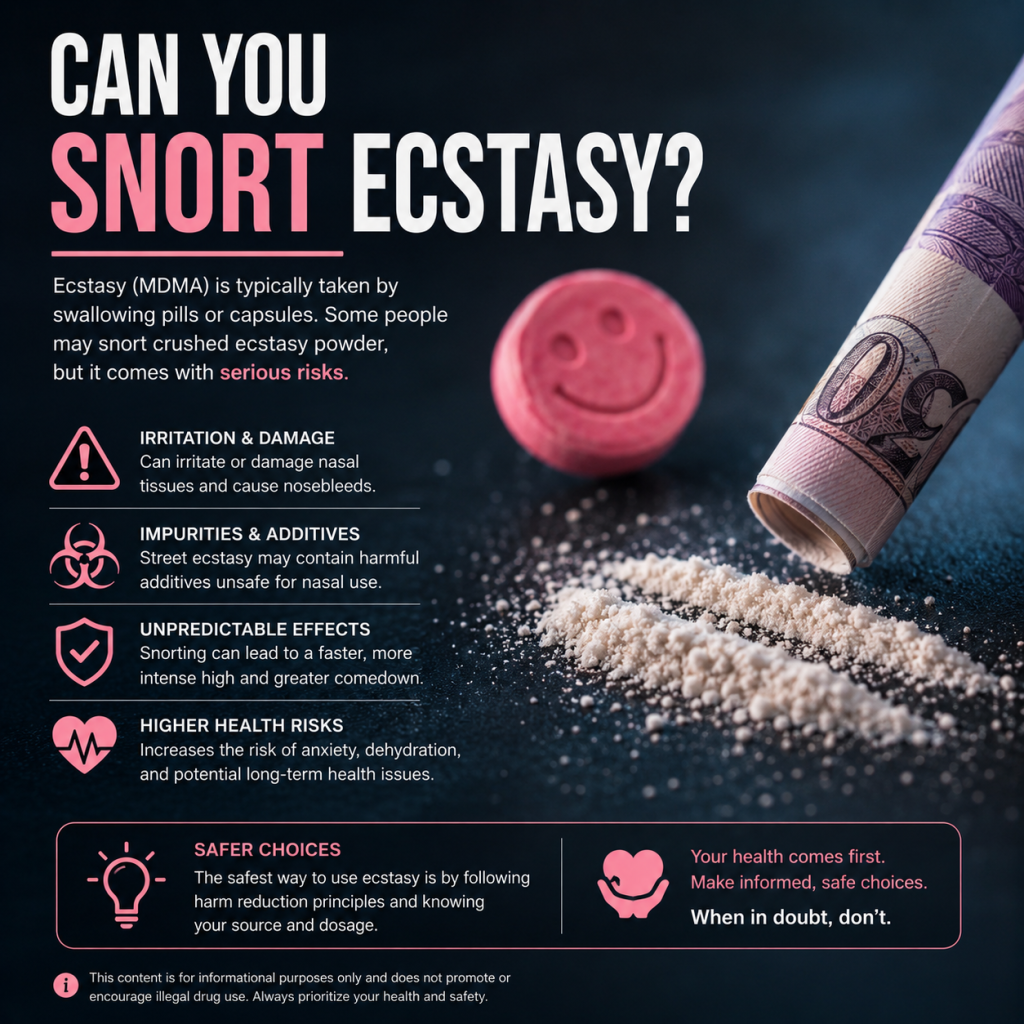
Yes, ecstasy or MDMA can be taken intranasally, but snorting ecstasy carries serious health risks. MDMA is commonly associated with tablets or capsules, but it can also appear as a powder or crystalline substance. Because illicit products are not reliably regulated, their contents and strength can be unpredictable.
Snorting MDMA also exposes the delicate tissues inside the nose to a substance that was not designed for intranasal use. This may cause irritation, burning, inflammation, nosebleeds, and other nasal complications.
The risks extend beyond the nose. MDMA can affect heart rate, blood pressure, body temperature, mood, and the nervous system. In serious cases, MDMA toxicity can result in seizures, organ damage, or death. Health Canada’s MDMA information provides detailed information about the potential short- and long-term risks.
For that reason, anyone searching “Can You Snort Ecstasy?” should look beyond whether it is physically possible and understand the potential consequences.
What Is Ecstasy or MDMA?
Ecstasy is a common name for MDMA, short for 3,4-methylenedioxymethamphetamine. It is a synthetic psychoactive substance with stimulant properties that can also alter mood, perception, and emotional experiences.
Common names include:
- Ecstasy
- Molly
- E
- X
- XTC
- Mandy
- Adam
However, these names do not guarantee what a product actually contains.
Illicit tablets and powders may contain MDMA, other psychoactive substances, or mixtures of different compounds. The Centre for Addiction and Mental Health (CAMH) explains that substances sold as ecstasy may contain drugs other than MDMA.
This unpredictability is one of the most important issues to understand when researching snorting ecstasy.
Can You Snort Ecstasy? Understanding the Risks
When a substance is placed inside the nose, it comes into direct contact with the nasal mucous membranes. These tissues contain delicate blood vessels and can be easily irritated.
Snorting MDMA may result in:
- Burning or stinging
- Nasal irritation
- Nosebleeds
- Inflammation
- Sinus discomfort
- Dryness
- Damage to nasal tissue
Repeated exposure may increase the likelihood of persistent nasal problems.
More importantly, intranasal use does not remove the systemic effects associated with MDMA. The substance can still affect cardiovascular function, body temperature, mood, and the nervous system.
9 Crucial Risks of Snorting Ecstasy
1. Nasal Irritation and Tissue Damage
One of the most immediate concerns with snorting ecstasy is damage to the nasal passages.
The tissues inside the nose are sensitive. Irritating powders can cause inflammation, soreness, dryness, and bleeding.
Repeated exposure may result in more persistent tissue injury.
Anyone experiencing ongoing nasal pain, frequent nosebleeds, or other persistent symptoms should speak with a healthcare professional.
2. Increased Heart Rate and Blood Pressure
MDMA can stimulate the cardiovascular system.
According to Health Canada’s MDMA guidance, MDMA can increase heart rate and blood pressure.
These effects may be particularly concerning for people with cardiovascular conditions or other underlying health problems.
Changing the route of administration does not eliminate these cardiovascular risks.
3. Dangerous Increase in Body Temperature
MDMA can increase body temperature.
The risk may become particularly concerning in hot environments or during intense physical activity. Severe overheating can become a medical emergency.
Health Canada also warns that both dehydration and excessive fluid consumption can create serious health problems associated with MDMA use.
Anyone experiencing severe overheating, confusion, collapse, or other serious symptoms should receive emergency medical attention.
4. Anxiety, Panic, and Psychological Distress
MDMA can produce feelings of euphoria and increased sociability, but unpleasant psychological effects can also occur.
Potential effects include:
- Anxiety
- Panic
- Confusion
- Paranoia
- Agitation
- Depression
- Difficulty concentrating
- Sleep problems
The effects can continue after the initial pleasurable experience has ended.
Therefore, snorting ecstasy does not eliminate the psychological risks associated with MDMA.
5. Unknown Ingredients and Contamination
One of the biggest dangers associated with illicit ecstasy is uncertainty about its contents.
A tablet, capsule, crystal, or powder sold as MDMA may contain other substances.
CAMH notes that products sold as ecstasy can contain substances such as caffeine, amphetamine, ketamine, LSD, or other compounds.
This means the appearance, colour, logo, or name of a product cannot guarantee what is actually inside it.
6. Seizures and Serious Medical Complications
MDMA toxicity can cause serious physiological complications.
Potential complications include:
- Seizures
- Severe overheating
- Cardiovascular problems
- Loss of consciousness
- Electrolyte disturbances
- Kidney complications
- Liver problems
The risk may be affected by factors including the person’s health, the substances involved, and whether multiple substances are used together.
If someone loses consciousness, experiences a seizure, develops severe overheating, has chest pain, or has difficulty breathing, seek emergency medical help immediately.
7. Possible Liver and Kidney Damage
Serious MDMA toxicity can affect major organs.
Repeated or heavy MDMA exposure has been associated with physical complications involving organs such as the liver and kidneys.
These risks can become especially concerning when severe overheating, dehydration, or interactions with other substances occur.
8. Mood Changes After MDMA Use
MDMA affects neurotransmitter systems involved in mood and emotional regulation.
After the effects wear off, some people may experience:
- Fatigue
- Low mood
- Irritability
- Anxiety
- Confusion
- Sleep difficulties
- Difficulty concentrating
Health Canada reports that some unpleasant psychological effects can continue beyond the immediate period of MDMA intoxication.
This is an important consideration for anyone researching the effects of ecstasy on mental wellbeing.
9. Interactions With Other Drugs and Medications
MDMA may interact with other psychoactive substances and certain medications.
These interactions can increase the possibility of dangerous reactions.
People taking prescription medication should speak with a healthcare professional rather than assuming that MDMA is compatible with their treatment.
This is particularly important for people taking medications that affect serotonin or other neurotransmitter systems.
Is Snorting Ecstasy More Dangerous Than Swallowing It?
The important point is that both routes can involve serious risks.
Snorting ecstasy introduces an additional concern because the nasal tissues are directly exposed to the substance. However, changing the route does not eliminate the broader risks associated with MDMA.
MDMA can affect body temperature, heart rate, blood pressure, mood, and the nervous system regardless of how it enters the body.
It is therefore misleading to describe recreational MDMA use through one route as completely safe.
The safest choice is to avoid illicit or unknown MDMA products.
Can Snorting Ecstasy Damage Your Nose?
Yes.
Repeated exposure to irritating substances through the nose can damage the nasal lining.
Potential symptoms include:
- Nosebleeds
- Nasal soreness
- Persistent congestion
- Dryness
- Crusting
- Irritation
- Sinus discomfort
More serious nasal complications may develop with repeated exposure.
If someone experiences persistent nasal symptoms after intranasal drug use, medical evaluation is appropriate.
Does Ecstasy Always Contain MDMA?
No.
This is one of the most important facts to understand about illicit ecstasy.
A product sold as ecstasy may contain MDMA, another psychoactive substance, multiple substances, or unknown ingredients.
Tablets may also have logos or markings that create the impression that they are genuine or consistent. However, appearance does not prove the contents or safety of a product.
This uncertainty is a major reason illicit drug use can be unpredictable.
What Are the Signs of an MDMA Emergency?
Some reactions require urgent medical attention.
Seek emergency help if someone who has taken MDMA develops:
- Loss of consciousness
- Seizures
- Severe confusion
- Extreme overheating
- Chest pain
- Difficulty breathing
- Fainting
- Serious weakness or collapse
- Severe agitation
- Other signs of a medical emergency
Do not leave someone experiencing a serious reaction alone.
If an unknown substance may be involved, provide emergency responders with as much accurate information as possible about what was taken.
For broader information about controlled substances and their health risks in Canada, visit Health Canada’s controlled and illegal drugs resource.
Can MDMA Affect Mental Health?
Yes.
MDMA can temporarily alter mood and perception, but negative psychological effects can also occur.
Some people experience anxiety, paranoia, depression, confusion, sleep problems, or emotional difficulties during or after use.
People experiencing depression or anxiety should speak with a qualified healthcare professional rather than attempting to self-treat mental-health conditions with recreational substances.
For readers interested in mushrooms and mental wellness, our guide to [Best Mushrooms for Depression and Anxiety] provides educational information about functional mushrooms and current research surrounding mushrooms and mental wellbeing.
Functional Mushrooms vs. MDMA
It is important not to confuse functional mushrooms with MDMA.
Functional mushrooms such as Lion’s Mane, Reishi, Cordyceps, and Chaga are fungi commonly used in wellness products. They are fundamentally different from MDMA, which is a synthetic psychoactive substance.
Functional mushrooms are generally discussed in the context of nutrition, wellness, and ongoing scientific research rather than recreational psychoactive effects.
If you want to learn more about non-psychoactive mushroom varieties, explore our [Functional Mushrooms] collection.
Understanding the distinction between functional mushrooms, psychedelic mushrooms, and synthetic substances such as MDMA is important when researching natural wellness products.
What About Psilocybin and Mental Health?
Psilocybin-containing mushrooms are also different from MDMA.
Researchers are studying psilocybin-assisted therapy for conditions including depression and anxiety. However, research conducted in controlled clinical settings should not be confused with unsupervised recreational use.
Clinical research generally involves participant screening, controlled environments, professional supervision, and follow-up care.
The evidence surrounding psychedelic-assisted therapies continues to develop, and more research is needed to understand their potential benefits, limitations, and risks.
Frequently Asked Questions About Snorting Ecstasy
Can You Snort Ecstasy?
Yes, MDMA can be taken intranasally, but snorting ecstasy is hazardous and can cause nasal injury in addition to the broader risks associated with MDMA.
Is Snorting Ecstasy Painful?
It can be. Powdered substances can irritate the nasal lining and cause burning, soreness, inflammation, or nosebleeds.
Can Snorting MDMA Damage Your Nose?
Yes. Repeated exposure can injure delicate nasal tissues and contribute to persistent nasal problems.
Does Snorting Ecstasy Make It Safe?
No. Changing the route of administration does not eliminate MDMA’s cardiovascular, neurological, psychological, or overheating risks.
Can Ecstasy Cause an Overdose?
Yes. Severe MDMA toxicity can involve overheating, seizures, cardiovascular problems, loss of consciousness, electrolyte disturbances, and organ complications.
Is Molly the Same as Ecstasy?
Both terms are commonly used to describe MDMA, but street products sold under either name may contain substances other than MDMA.
Can MDMA Cause Anxiety?
Yes. Anxiety, panic, paranoia, and other psychological effects can occur during or after MDMA use.
Can MDMA Interact With Medication?
Yes. MDMA may interact with some prescription medications. Anyone taking medication should discuss potential interactions with a qualified healthcare professional.
What Should I Do if Someone Has a Severe Reaction?
Treat it as a medical emergency. Contact emergency services immediately and stay with the person until professional help arrives.
Final Thoughts: Can You Snort Ecstasy Safely?
The question “Can You Snort Ecstasy?” should not simply be about whether the substance can physically be taken through the nose. The more important issue is the potential health risk.
Snorting MDMA exposes sensitive nasal tissues to an irritating substance while retaining the broader risks associated with MDMA, including increased heart rate and blood pressure, overheating, psychological distress, seizures, and potentially life-threatening complications.
The unpredictable composition of illicit ecstasy adds another serious concern because a product sold as MDMA may contain other substances.
If you are researching psychoactive substances, rely on credible health information rather than assuming that changing the route of administration makes a substance safe.
For more educational information about mushrooms, wellness, and related topics, visit the [Organic Shrooms Canada Blog].
If you or someone you know is struggling with substance use, anxiety, depression, or another mental-health concern, speaking with a qualified healthcare professional can help you find appropriate support.
Sources and Further Reading
The information in this article should not replace professional medical advice. For reliable information about MDMA and substance-related health risks, consult Health Canada and CAMH.
