Uncategorized
Magic Mushrooms
Aug
Introduction To Magic Mushrooms
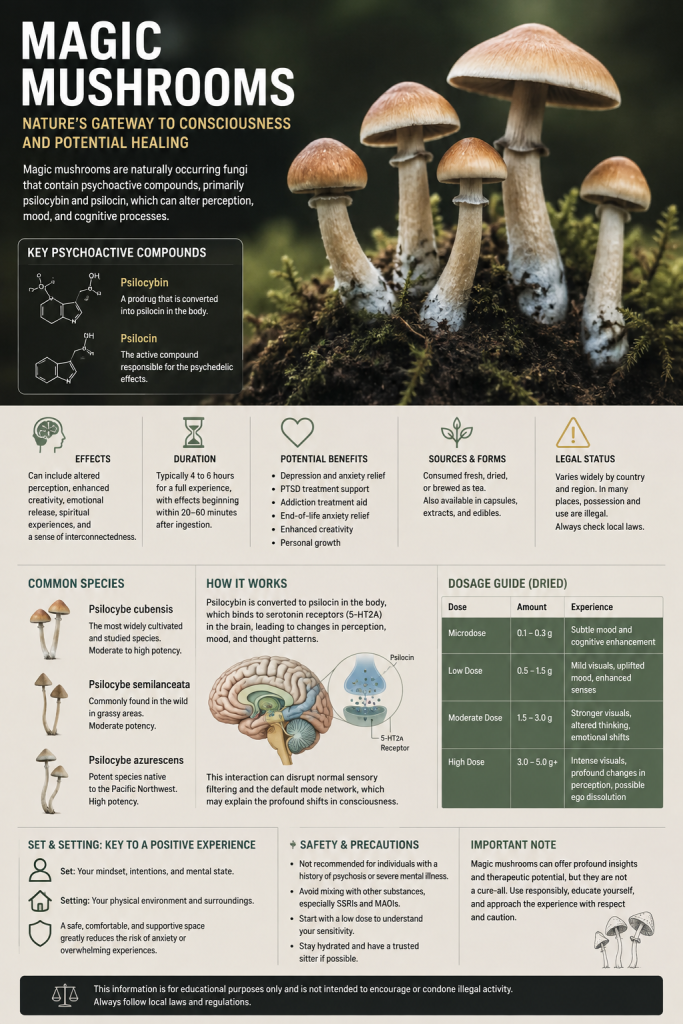
Magic mushrooms are a group of naturally occurring fungi that contain the psychoactive compounds psilocybin and psilocin. For centuries, different cultures have recognized these mushrooms for their historical and ceremonial significance. Today, scientists continue to study psilocybin because of its effects on perception, cognition, and mood under carefully controlled research conditions.
In recent years, interest in psilocybin has grown significantly. Universities and medical research institutions are exploring its potential therapeutic applications, while public curiosity about psychedelic science has also increased. As a result, reliable, evidence-based information has become more valuable than ever.
This comprehensive guide explains what magic mushrooms are, how psilocybin works, the most well-known species, current scientific research, safety considerations, and answers to frequently asked questions. Additionally, you’ll find links to detailed guides throughout this article so you can explore each topic in greater depth.
What Are Magic Mushrooms
Magic mushrooms are fungi that naturally produce psilocybin, a compound that your body converts into psilocin after ingestion. Once converted, psilocin interacts primarily with serotonin receptors in the brain. Consequently, researchers believe this interaction contributes to the changes in perception and cognition reported in scientific studies.
Scientists have identified more than 200 mushroom species that contain psilocybin. However, these species differ in appearance, geographic distribution, habitat, and chemical composition.
Some of the best-known species include:
- Psilocybe cubensis
- Psilocybe semilanceata
- Psilocybe cyanescens
- Psilocybe azurescens
Unlike culinary mushrooms such as shiitake, oyster, or portobello mushrooms, these species contain naturally occurring psychoactive compounds.
Related Guides
- What Are Magic Mushrooms?
- Types of Magic Mushrooms
- How Psilocybin Works
A Brief History of Magic Mushrooms
Historical and archaeological evidence suggests that Indigenous communities in parts of Central and South America have used psilocybin-containing mushrooms in ceremonial traditions for centuries.
Later, international interest expanded during the mid-20th century after ethnomycologists documented traditional practices and chemist Albert Hofmann successfully isolated psilocybin. Although regulatory changes slowed scientific progress for several decades, universities and research institutions have resumed clinical research in recent years.
Related Guide
- History of Magic Mushrooms
How Psilocybin Works
Psilocybin acts as a prodrug, meaning the body converts it into psilocin after ingestion. Once formed, psilocin interacts primarily with serotonin (5-HT2A) receptors in the brain.
Furthermore, researchers believe this interaction temporarily changes communication between several brain networks involved in perception, cognition, and emotional processing. However, scientists continue to investigate these mechanisms, and many questions remain unanswered.
Current evidence comes from carefully controlled clinical research. Therefore, researchers caution against interpreting ongoing studies as established medical treatments outside approved healthcare settings.
Learn More
- How Psilocybin Works
- Psilocybin Research
Common Types of Magic Mushrooms
Although scientists have identified hundreds of psilocybin-containing species, several have become especially well known through scientific literature and educational resources.
Psilocybe cubensis
Psilocybe cubensis is one of the most widely recognized psilocybin-containing mushroom species. Because researchers and educators frequently reference it, it serves as an important starting point for learning about magic mushrooms.
Read more
- Psilocybe cubensis Guide
Golden Teacher
Golden Teacher is a popular variety associated with Psilocybe cubensis. As a result, it appears frequently in educational discussions about mushroom taxonomy and history.
Read more
- Golden Teacher Guide
Penis Envy
Penis Envy is another well-known variety of Psilocybe cubensis. Likewise, it often appears in scientific discussions and educational resources that compare different mushroom varieties.
Read more
- Penis Envy Guide
B+
B+ is another commonly referenced variety with its own cultivation history and distinguishing characteristics.
Read more
- B+ Mushroom Guide
Blue Meanies
The name “Blue Meanies” has been used for different mushrooms in different contexts. Therefore, it’s important to distinguish between similarly named species when discussing scientific or educational information
Read more
Reported Effects
Published research and observational reports describe a range of psychological and sensory effects associated with psilocybin. However, experiences vary considerably between individuals and depend on numerous factors, including physiology, expectations, and environment.
Consequently, researchers continue to investigate these effects in carefully controlled clinical settings to better understand both potential therapeutic applications and possible risks.
Related Articles
- Magic Mushroom Effects
- Psilocybin and the Brain
Current Scientific Researc
Modern psilocybin research has expanded significantly over the past decade.
Current areas of investigation include:
- Depression
- Anxiety associated with serious illness
- Substance use disorders
- Obsessive-compulsive disorder (OCD)
- Post-traumatic stress disorder (PTSD)
Although several early studies have produced encouraging findings, research remains ongoing. Therefore, scientists continue to evaluate safety, effectiveness, and long-term outcomes before drawing broader conclusions.
Continue Reading
- Psilocybin Research
- Clinical Trials on Psilocybin
Safety Considerations
Scientific research also highlights several important safety considerations.
For example:
- Individual responses vary considerably.
- Certain psychiatric conditions may increase potential risks.
- Mixing substances may increase the likelihood of adverse outcomes.
- Wild mushrooms can closely resemble poisonous species, making accurate identification difficult.
- Clinical studies take place under carefully controlled conditions that differ significantly from everyday environments.
In addition, anyone seeking information about psychedelic research should rely on reputable medical organizations and peer-reviewed scientific literature rather than anecdotal sources.
Related Guides
- Magic Mushroom Safety
- Harm Reduction Guide
- Psilocybin Drug Interactions
Legal Status
The legal status of psilocybin-containing mushrooms varies significantly between countries and, in some cases, between states, provinces, or municipalities.
Because laws change over time, always consult official government resources before relying on legal information.
Related Guide
- Magic Mushroom Legal Status
Frequently Asked Questions
Can You Smoke Magic Mushrooms? The Truth Explained
What is psilocybin?
Psilocybin is a naturally occurring compound found in certain mushroom species. After ingestion, the body converts it into psilocin.
Do Shrooms Make Your Pupils Big
To understand why your eyes react this way, we have to look at how psilocybin interacts with your brain and nervous system.
How many species contain psilocybin?
Scientists have identified more than 200 mushroom species that naturally contain psilocybin.
Are all magic mushrooms the same?
No. Different species vary in taxonomy, appearance, habitat, geographic distribution, and chemical composition.
How Long Do Mushroom Gummies Last
When people ask about how long these edibles last, they are usually combining three separate timelines into one question. To make sense of your experience, it helps to separate them Read more.
Researchers continue to investigate psilocybin because they want to better understand its effects on the brain and its potential role in treating certain mental health conditions within carefully controlled clinical settings.
Are magic mushrooms legal?
No single answer applies worldwide. Instead, laws vary significantly depending on the country, state, or region. Always consult official local regulations.
Continue Reading
Expand your knowledge by exploring these related guides:
- What Are Magic Mushrooms?
- Types of Magic Mushrooms
- History of Magic Mushrooms
- How Psilocybin Works
- Magic Mushroom Effects
- Magic Mushroom Safety
- Psilocybin Research
- Psilocybe cubensis Guide
- Golden Teacher Guide
- Penis Envy Guide
- Magic Mushroom FAQ
Further Reading & Reference
For readers who want to explore peer-reviewed research and evidence-based information, the following resources are excellent starting points:
- PubMed – https://pubmed.ncbi.nlm.nih.gov/
- National Institute on Drug Abuse (NIDA): Psilocybin – https://nida.nih.gov/
- Johns Hopkins Center for Psychedelic and Consciousness Research – https://hopkinspsychedelic.org/
These organizations publish research updates, scientific literature, and educational resources that support a deeper understanding of psilocybin and psychedelic science.
