magic mushroms facts
Magic Mushrooms Benefits @2026
Aug
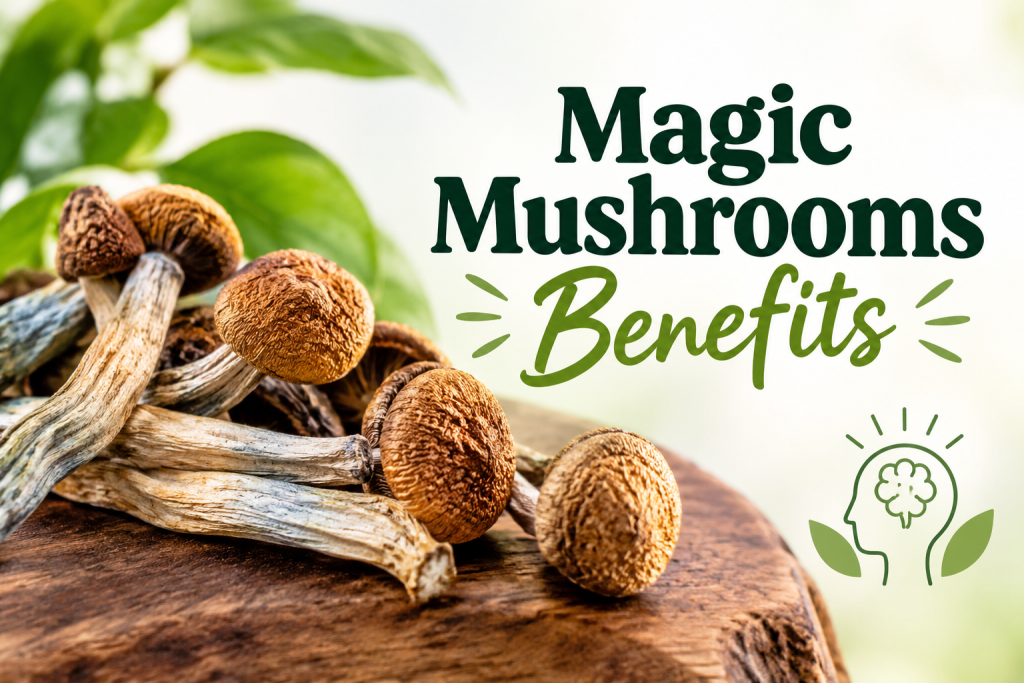
Magic Mushrooms Benefits, What Science Says About Psilocybin
Interest in magic mushrooms benefits has grown significantly as researchers continue studying psilocybin and its potential therapeutic applications. Magic mushrooms contain psilocybin, a naturally occurring psychedelic compound that can produce profound changes in perception, mood, cognition, and emotional experience.
Scientific research has increasingly examined psilocybin-assisted therapy for conditions such as depression, anxiety associated with serious illness, and certain substance-use disorders. However, an important distinction is necessary: promising research into psilocybin-assisted therapy does not mean that recreational use of magic mushrooms has been proven to treat medical conditions.
So, what are the potential benefits of magic mushrooms, and what does the science actually say? This guide explores the current evidence, how psilocybin works, potential therapeutic applications, risks, and the difference between clinical research and recreational mushroom use.
What Are Magic Mushrooms?
Magic mushrooms are fungi that contain naturally occurring psychoactive compounds, most notably psilocybin and psilocin. Hundreds of mushroom species contain psilocybin or related compounds, although their chemical composition and potency can vary.
Psilocybin itself is considered a prodrug because the body converts it into psilocin after ingestion. Psilocin then interacts with serotonin receptors in the brain, contributing to the changes in perception, emotions, thoughts, and sensory processing associated with psychedelic experiences.
Magic mushrooms have also been used in traditional and ceremonial contexts by some Indigenous cultures for generations. Modern scientific research, however, generally focuses on purified or standardized psilocybin administered under controlled conditions rather than ordinary recreational mushroom consumption.
If you’re new to the subject, learn more about what magic mushrooms are and how they differ from other types of fungi.
For additional background, the National Institute on Drug Abuse (NIDA) explains psilocybin and psychedelic drugs, including their effects, risks, and current research.
What Are the Potential Benefits of Magic Mushrooms?
When scientists discuss the potential benefits of magic mushrooms, they are generally referring to research involving psilocybin, particularly when it is administered in a controlled therapeutic environment.
Researchers have investigated several potential applications, including depression, anxiety, substance-use disorders, emotional well-being, and quality of life.
Importantly, research findings are not the same as medical guarantees. Many studies are still relatively small, and researchers continue to investigate the long-term effectiveness, safety, and appropriate clinical applications of psilocybin.
1. Potential Effects on Depression
One of the most extensively researched potential applications of psilocybin is depression.
Clinical trials have investigated whether psilocybin-assisted therapy could help people experiencing major depressive disorder or depression that has not responded adequately to conventional treatments.
A 2023 randomized clinical trial published in JAMA evaluated a single dose of synthetic psilocybin with psychological support in adults with major depressive disorder. The study reported significantly reduced depressive symptoms compared with niacin placebo through the study follow-up period, although adverse events were more common with psilocybin.
Earlier randomized research published in JAMA Psychiatry also investigated psilocybin-assisted therapy for major depressive disorder and reported substantial reductions in depressive symptoms following treatment sessions combined with supportive psychotherapy.
More recently, a 2025 systematic review and meta-analysis of randomized controlled trials found that psilocybin-assisted therapy was associated with improvements in depressive symptoms compared with comparator interventions, while also identifying increased risks of some adverse events such as headache and dizziness.
However, these findings should be interpreted carefully.
The research does not establish that eating magic mushrooms independently will cure depression. Clinical studies typically involve carefully screened participants, standardized psilocybin, trained professionals, controlled environments, psychological preparation, and follow-up support.
You can explore the underlying peer-reviewed literature through the National Library of Medicine’s PubMed database.
2. Potential Effects on Anxiety
Researchers have also studied psilocybin’s potential effects on anxiety and psychological distress.
Some of the most notable research has involved people facing serious or life-threatening illnesses. For these individuals, anxiety may be closely connected to uncertainty, mortality, pain, and major changes in quality of life.
Clinical studies have investigated whether a supervised psilocybin experience combined with psychological support could reduce anxiety and existential distress.
Several studies have reported encouraging results, although researchers continue to investigate how long these effects last and which patients are most likely to benefit.
It is important to distinguish this research from the idea that unsupervised mushroom use is an established treatment for anxiety. The clinical evidence concerns specific therapeutic protocols rather than general recreational use.
For a broader overview of the experience itself, see our guide to the effects of magic mushrooms.
3. Potential Effects on Addiction and Substance Use
Another emerging area of psychedelic research involves substance-use disorders.
Researchers have investigated whether psilocybin-assisted therapy could potentially help people change deeply established behavioral patterns associated with substance use.
Studies have explored areas including:
- Tobacco dependence
- Alcohol use disorder
- Other forms of problematic substance use
One theory is that psychedelic experiences, when combined with psychological support, may help some individuals reconsider established patterns of thinking and behavior.
However, this area of research remains developing. Psilocybin should not currently be presented as a universally established treatment for addiction.
More large-scale clinical trials are needed to determine effectiveness, appropriate treatment protocols, long-term outcomes, and potential risks.
NIDA notes that researchers are studying psychedelic and dissociative drugs for potential applications in substance-use and mental-health conditions while emphasizing the need for continued research.
4. Potential Psychological and Emotional Benefits
Researchers are also examining changes that may occur beyond traditional psychiatric symptom scores.
Some studies have investigated concepts such as:
- Psychological flexibility
- Emotional processing
- Mindfulness
- Openness
- Changes in perspective
- Personal meaning
- Emotional well-being
Some participants in controlled studies report experiencing a greater sense of emotional openness or a shift in how they think about personal challenges.
These experiences can be meaningful, but subjective reports should not automatically be interpreted as proof of a medical benefit.
Researchers continue working to understand which psychological changes are temporary, which may persist, and how they relate to measurable improvements in mental health.
This distinction is particularly important when discussing what psychedelics are and their potential applications.
5. Potential Effects on Quality of Life
Quality of life is another area being investigated in psychedelic research.
For people dealing with serious illnesses, psychological distress can significantly affect overall well-being. Researchers have therefore examined whether psilocybin-assisted therapy may influence measures such as emotional well-being, existential distress, and quality of life.
Some clinical studies have reported improvements following supervised psilocybin sessions.
However, these results should be interpreted within the context of the study design. Participants are generally carefully screened and supported before, during, and after the psychedelic experience.
The evidence does not establish that ordinary recreational mushroom use produces the same outcomes.
How Does Psilocybin Work?
Understanding how psilocybin works can help explain why researchers are interested in its potential therapeutic effects.
After psilocybin enters the body, it is converted into psilocin. Psilocin interacts with several serotonin receptors, particularly the 5-HT2A receptor, which plays an important role in perception, cognition, and mood.
This activity can temporarily alter how different areas of the brain communicate.
Researchers have used brain-imaging techniques to investigate changes in functional connectivity and communication between brain networks during psychedelic experiences.
The default mode network (DMN) has received particular attention. This network is associated with processes such as self-referential thinking, autobiographical reflection, and internal thought.
Studies have observed changes in the organization and connectivity of brain networks following psilocybin administration. Researchers are investigating whether these temporary changes could help explain some of the psychological effects observed in clinical trials.
However, it would be an oversimplification to say that psilocybin simply “turns off” the default mode network or permanently “resets” the brain.
Neuroscience research is more complicated, and scientists are still determining how changes in brain connectivity relate to therapeutic outcomes.
Readers can also explore our educational guide on the effects of magic mushrooms for additional information about perception, cognition, and psychedelic experiences.
What Does Scientific Research Say About Magic Mushroom Benefits?
The scientific evidence surrounding psilocybin is promising but should be interpreted carefully.
It can be useful to divide the evidence into several categories.
Established Pharmacological Effects
It is well established that psilocybin produces psychedelic effects after being converted into psilocin.
These effects can include:
- Perception
- Sensory processing
- Mood
- Cognition
- Time perception
- Emotional experience
NIDA describes psychedelic drugs as substances that can temporarily alter mood, thoughts, and perceptions and emphasizes that research into their potential medical applications is ongoing.
Promising Therapeutic Evidence
Clinical research has produced encouraging findings regarding psilocybin-assisted therapy for certain forms of depression and psychological distress.
Several randomized controlled trials have reported clinically meaningful improvements under controlled conditions. A 2025 meta-analysis of randomized trials found an overall antidepressant effect for psilocybin-assisted therapy compared with comparator interventions, while also highlighting adverse-event considerations.
You can explore the scientific literature through PubMed and the U.S. National Library of Medicine.
Emerging Evidence
Researchers continue investigating potential applications involving:
- Substance-use disorders
- Anxiety
- Obsessive-compulsive disorder
- Post-traumatic stress symptoms
- Quality of life
- Existential distress
Some of these areas have promising preliminary findings, but they require additional research.
Anecdotal Claims
Personal experiences can be meaningful to individuals, but anecdotes are not equivalent to clinical evidence.
Online testimonials may claim that magic mushrooms improve mood, creativity, spirituality, relationships, or overall wellness. Such experiences cannot establish that the same outcome will occur for everyone.
Scientific conclusions require controlled research, appropriate comparison groups, reproducible methods, and careful analysis.
Are the Benefits of Magic Mushrooms Scientifically Proven?
The answer depends on what is meant by “magic mushrooms benefits.”
There is growing scientific evidence that psilocybin-assisted therapy may have therapeutic potential for certain conditions when administered in carefully controlled clinical settings.
However, this is different from saying that recreational consumption of magic mushrooms has been scientifically proven to treat depression, anxiety, addiction, or other medical conditions.
Clinical research often uses standardized psilocybin under controlled conditions.
Researchers may also provide:
- Medical screening
- Psychological preparation
- Controlled surroundings
- Professional supervision
- Psychological support
- Follow-up care
These factors can substantially influence the overall experience and outcomes.
Therefore, positive clinical research should not automatically be interpreted as evidence that consuming mushrooms independently will produce the same results.
Magic Mushrooms vs. Psilocybin-Assisted Therapy
A common misconception is that taking magic mushrooms independently is equivalent to participating in psychedelic-assisted therapy.
It is not.
| Feature | Recreational Mushroom Use | Psilocybin-Assisted Therapy |
|---|---|---|
| Substance | Mushroom potency and composition can vary | Standardized psilocybin is typically used in research |
| Setting | Environment may be unpredictable | Carefully controlled clinical environment |
| Preparation | May be absent | Psychological preparation is generally included |
| Professional support | Usually absent | Trained professionals may supervise the experience |
| Purpose | Often recreational or personal | Investigational therapeutic purpose |
| Follow-up | May not occur | Follow-up and psychological support may be included |
This distinction is essential when interpreting research.
When a clinical study reports positive outcomes, researchers are evaluating a specific therapeutic intervention rather than simply asking whether people who consume mushrooms experience benefits.
Risks and Potential Side Effects
Psilocybin can produce powerful psychological and physical effects, and not every experience is positive.
Potential short-term effects may include:
- Anxiety
- Panic
- Confusion
- Nausea
- Dizziness
- Increased heart rate
- Increased blood pressure
- Changes in sensory perception
- Impaired judgment
- Emotional distress
- Paranoia or fear
Health Canada similarly lists effects such as anxiety, fear, nausea, increased heart rate and blood pressure, and the possibility of distressing experiences among the risks associated with magic mushrooms.
The psychological experience can also be unpredictable.
A person’s expectations, environment, mental state, physical health, and other substances or medications may influence how they respond.
Some individuals may experience severe psychological distress during an intense psychedelic experience.
Because of these uncertainties, clinical researchers use screening and monitoring procedures to reduce potential risks.
Who Should Be Especially Cautious?
People considering psychedelic substances should be particularly cautious if they have significant medical or psychiatric considerations.
This may include people with:
- A personal history of psychotic disorders
- Certain bipolar-spectrum conditions
- Significant cardiovascular problems
- Serious psychiatric symptoms
- Pregnancy or breastfeeding
- Potential medication interactions
The relationship between psilocybin and psychiatric medications can also be complex.
People taking prescription medications should not stop or change their medication without medical guidance.
Anyone with concerns about their health, medications, or potential risks should speak with a qualified healthcare professional.
NIDA also emphasizes that psychedelic experiences can vary substantially and that safety remains an important area of research.
Frequently Asked Questions
What are psilocybin mushrooms used for?
Psilocybin-containing mushrooms have historical and cultural uses, while modern researchers are studying psilocybin for potential therapeutic applications. Clinical research has investigated depression, anxiety, addiction, and other areas of mental health.
Can magic mushrooms help with depression?
Clinical studies suggest that psilocybin-assisted therapy may reduce depressive symptoms in some people. However, these studies generally involve standardized psilocybin, professional supervision, psychological support, and careful participant screening. This does not establish magic mushrooms as a guaranteed cure for depression.
Can psilocybin help with anxiety?
Research suggests that psilocybin-assisted therapy may help reduce anxiety and psychological distress in certain populations. Some research has focused on people experiencing serious or life-threatening illnesses. More research is needed to determine its broader clinical applications.
Are the benefits of magic mushrooms scientifically proven?
Some potential therapeutic effects of psilocybin are supported by promising clinical research, but the evidence does not establish that recreational magic mushroom use is a proven treatment for medical or psychiatric conditions.
How does psilocybin affect the brain?
Psilocybin is converted into psilocin, which interacts with serotonin receptors, particularly 5-HT2A receptors. This can temporarily change perception, cognition, mood, and communication between brain networks.
What are the risks of magic mushrooms?
Potential risks include anxiety, panic, confusion, nausea, dizziness, increased heart rate, impaired judgment, and distressing psychological experiences. Individual responses can vary significantly. Health Canada provides additional information about the risks associated with psilocybin and magic mushrooms.
Is psilocybin the same as magic mushrooms?
No. Psilocybin is a psychedelic compound found in certain mushrooms. Magic mushrooms are the fungi that naturally contain psilocybin and related compounds.
Are magic mushrooms legal in Canada?
Under current Health Canada information, the production, sale, and possession of magic mushrooms, psilocybin, and psilocin are illegal in Canada unless specifically authorized, such as through an applicable licence, exemption, or regulatory pathway. Health Canada also states that there are currently no approved therapeutic products containing psilocybin in Canada.
For a more detailed explanation, read our guide to Are Magic Mushrooms Legal?.
Is psychedelic therapy the same as taking magic mushrooms?
No. Psychedelic-assisted therapy is a structured clinical approach involving screening, preparation, controlled administration, professional support, and follow-up. Independent mushroom use does not provide the same safeguards.
